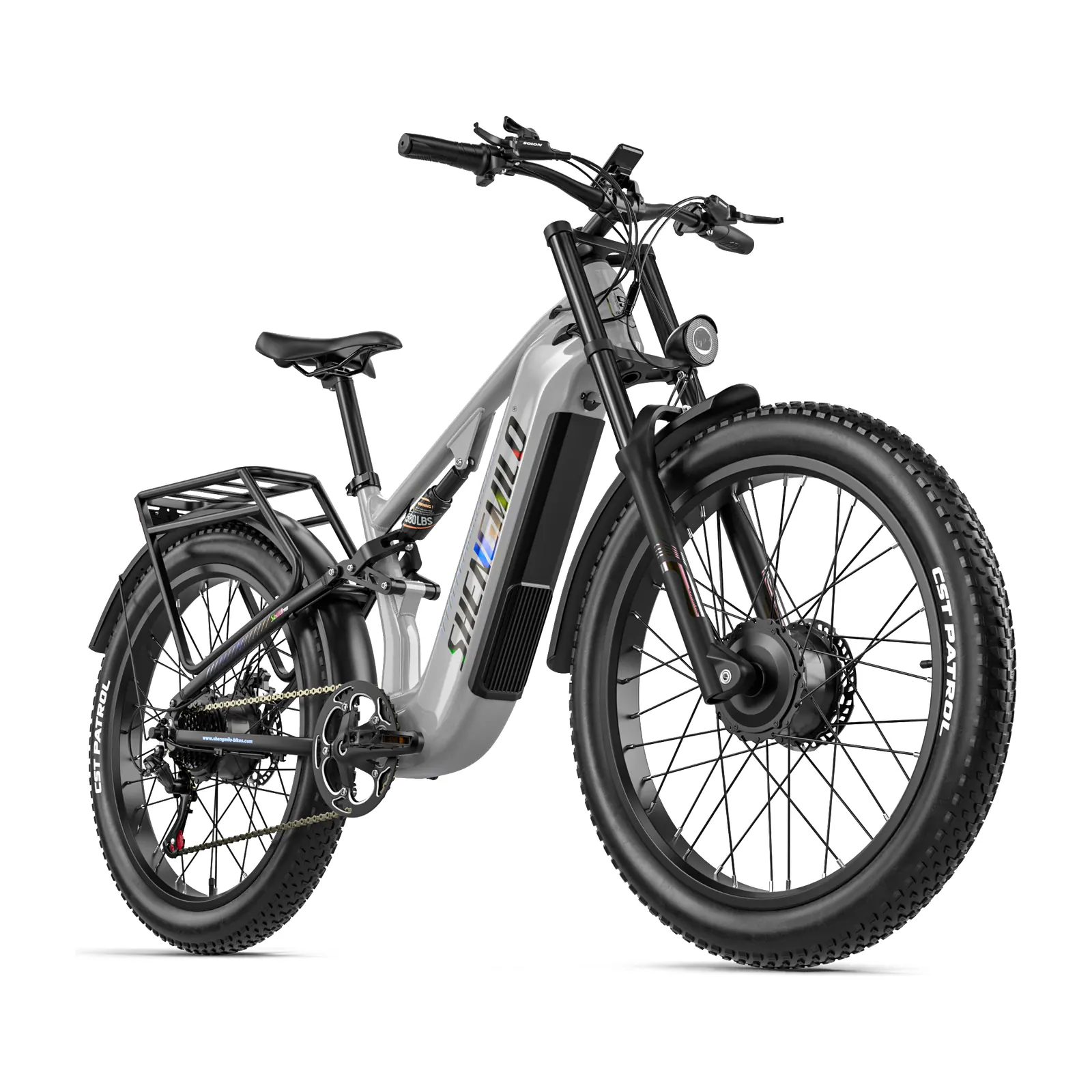
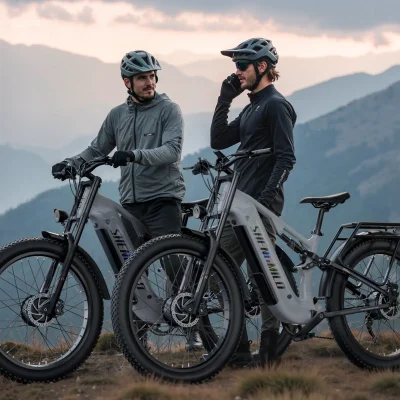
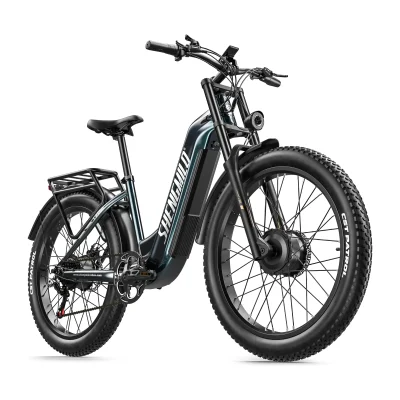
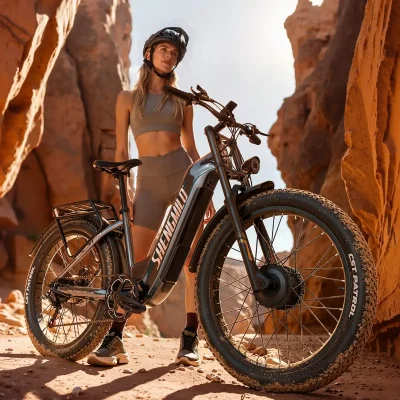
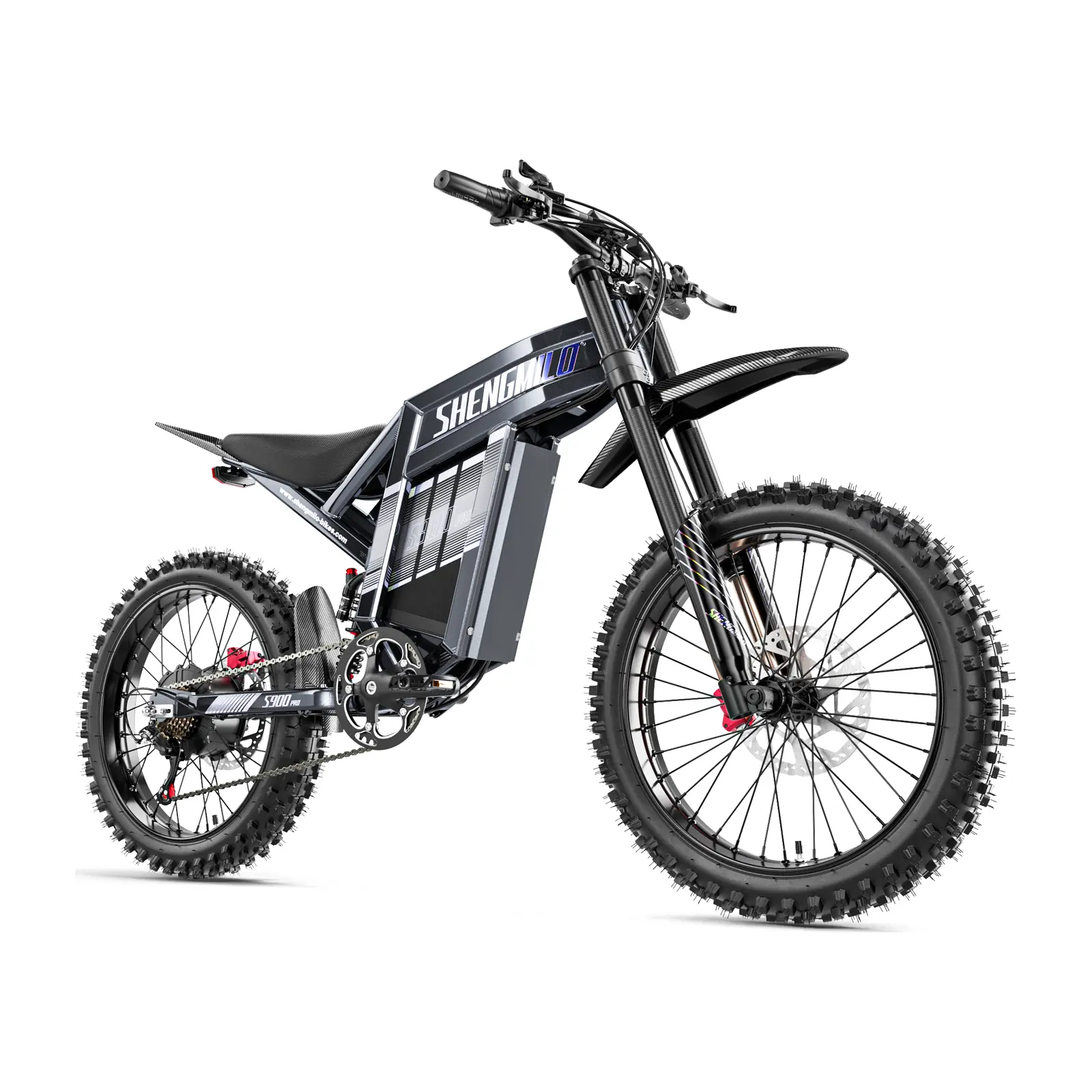
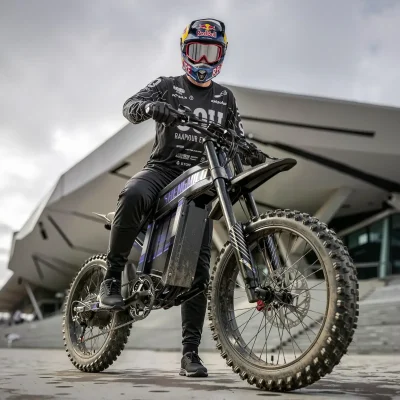
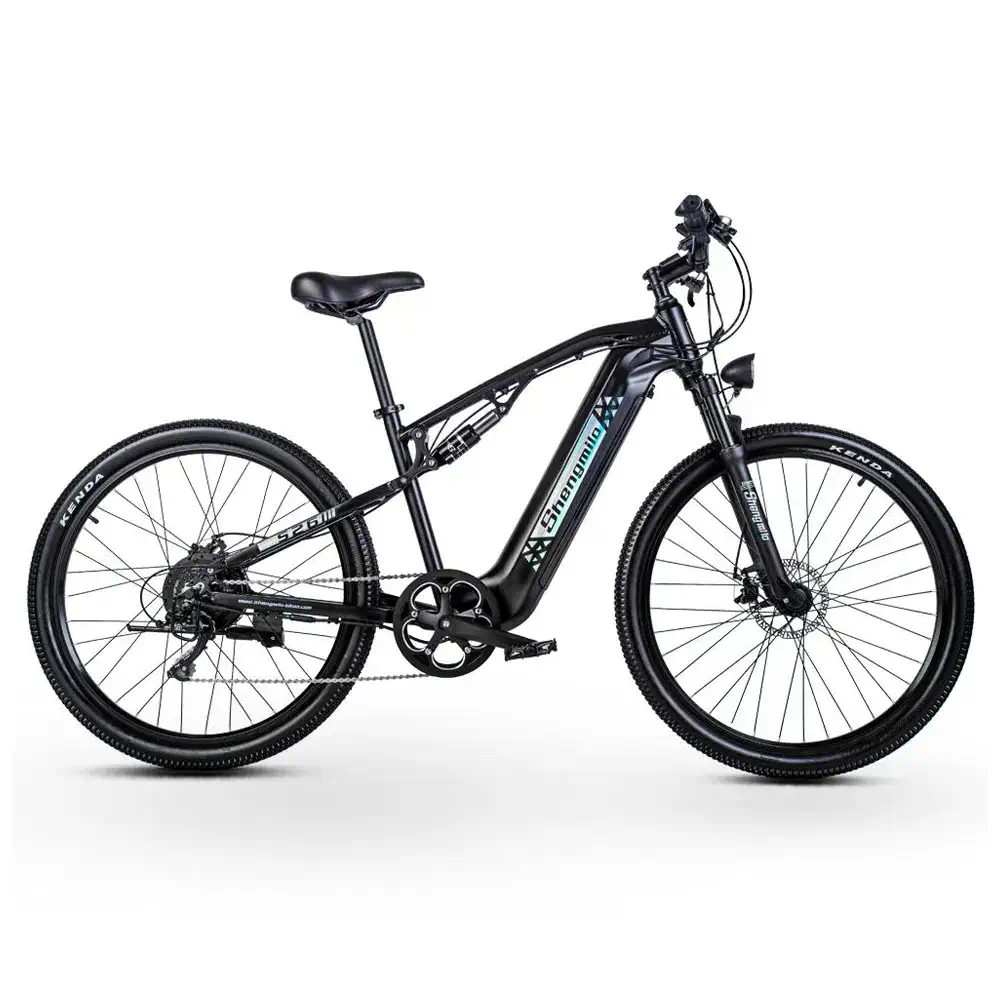
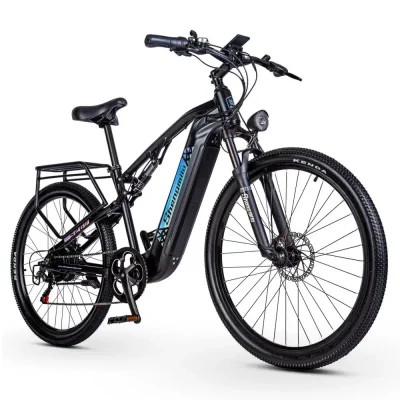
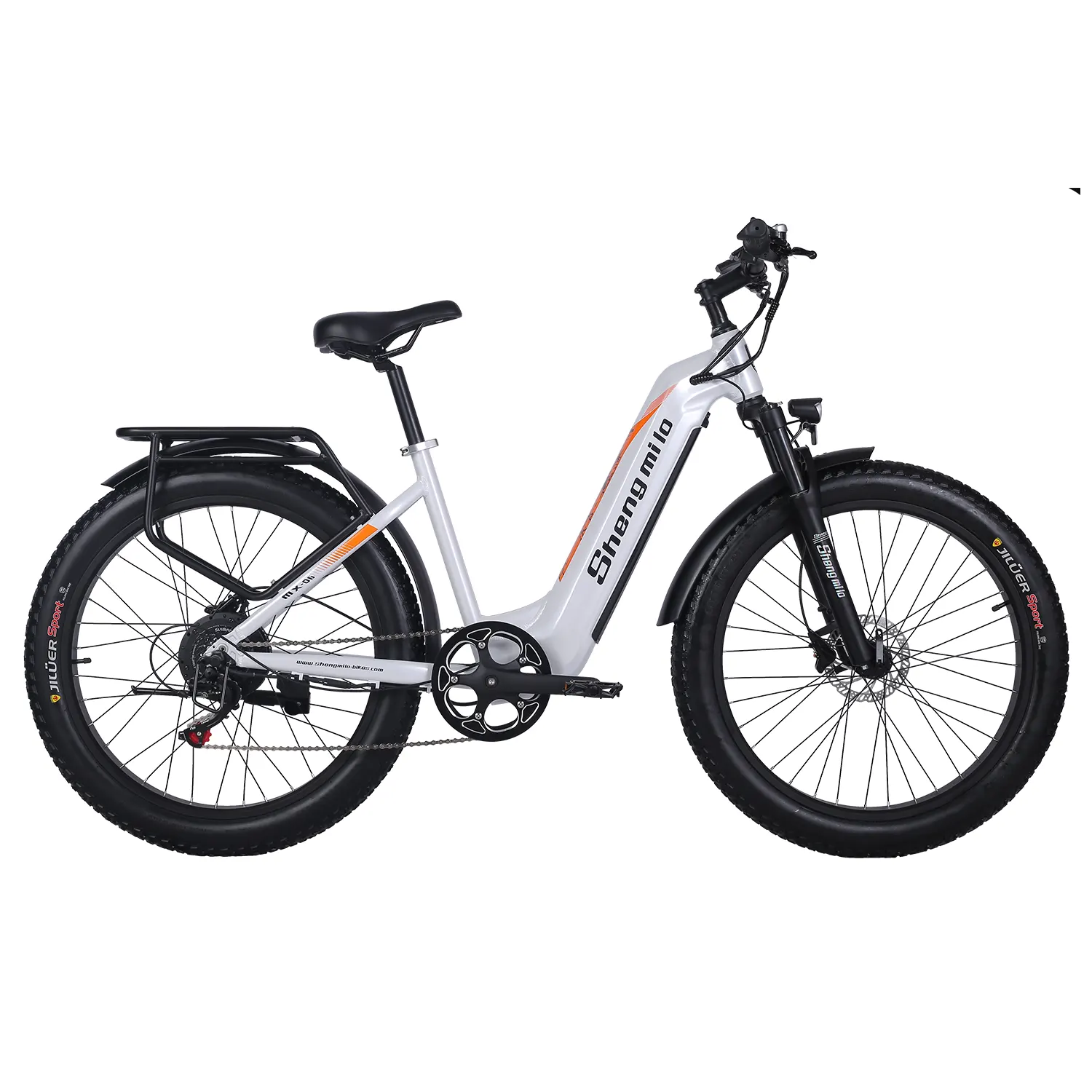
In a nutshell: a dual motor e-bike drives both wheels. That means more grip in loose ground, more pull up steep banks and a calmer feel at full power. It won’t go any faster, though, and it uses more battery when both motors are working hard. Here’s an honest look at what two motors really change – and when one motor is still the smarter buy.
Most e-bikes have a single motor, usually in the back wheel. The Shengmilo S600 PRO and S700 PRO have two: one in the front wheel and one in the back. It sounds like a small detail – until you ride up your first hill.
A hub motor in each wheel: front and rear drive, like a 4×4.
Dual motor e-bike vs single motor: which comes out on top?
Let’s start with the straight comparison: the S600 PRO with both motors running against the same bike on one motor. The figures are the manufacturer’s; the rest is basic physics.
| What matters |
Dual motor (2 × 1000W) |
Single motor (1 × 1000W) |
Winner |
| Torque |
160 Nm combined |
80 Nm |
Dual |
| Climbing |
Up to 40° (manufacturer rating) |
Struggles on steep, loose slopes |
Dual |
| Grip in mud, wet grass and snow |
Both wheels pull |
Back wheel can spin |
Dual |
| Pulling away from a standstill |
Strong and even |
Slower, more shove from behind |
Dual |
| Hill start with a load on the rack |
Easy, even on steep banks |
Needs hard pedalling |
Dual |
| Strain on each motor |
Half the work each |
One motor does everything |
Dual |
| Top speed |
Same |
Same |
Draw |
| Range at full power |
Shorter – two motors use more energy |
Longer |
Single |
| Bike weight |
Heavier |
Lighter |
Single |
Two motors win where it counts on rough ground: torque, grip and climbing. One motor wins on weight and battery use. And notice that top speed is a draw – the controller sets the speed limit, not the number of motors. Anyone who tells you a second motor makes a bike faster is selling you a myth.
How a dual motor e-bike works
It’s the same idea as four-wheel drive on a car. Each wheel has its own hub motor, and both drive at the same time, so the power is spread across the whole bike instead of all coming from the back.
On the S600 PRO, the two motors give 2 × 1000W and 2 × 80 Nm – 160 Nm of torque in total. Torque is the twisting force that gets you moving from a standstill and hauls you up a hill. Power, measured in watts, is what keeps you going once you’re rolling.
Why grip matters more than power
All the power in the world is no use if the wheel just spins. With one rear motor, every bit of force goes through the back tyre. On gravel, wet grass or snow, that tyre can lose its grip and the bike simply digs itself in.
With two motors, the front wheel pulls too. If the back wheel slips for a second, the front keeps you moving – so you stay in control where a single-motor bike would start sliding about.
40° of climbing: what does that actually mean?
The S600 PRO is rated to climb slopes of up to 40°. That number’s hard to picture, so here’s some perspective.
UK road signs show gradients as a percentage, not in degrees. A 40° slope works out at roughly 84%. Hardknott Pass in the Lake District – one of the steepest roads in Britain – tops out at about 33%, or around 18°.
So you’ll hardly ever meet a slope that uses the full rating. But that’s exactly the point: with so much power in reserve, ordinary hills feel easy. The motors don’t labour, the bike doesn’t bog down, and you reach the top without fighting the pedals.
A calmer, safer ride
Plenty of people expect two motors to feel wild. In practice, it’s the other way round. Because the work is shared, each motor runs under less strain and the power comes in smooth and even. A single rear motor tends to shove you from behind, which can feel snatchy on loose ground.
That’s what riders tell us they notice most: the bike feels stable and in control, even at full power. For older and heavier riders especially, that calm feeling builds confidence fast.
One motor or two – you choose
You don’t need both motors all the time. On flat, easy ground, ride on one and save battery. When the hills or the rough stuff start, switch the second motor on. You get the efficiency of one motor and the strength of two, on the same bike.
The battery: power that lasts all day
Two strong motors need a battery to match, so the S600 PRO carries a 48V 25Ah battery with 1,200 Wh – about 43% more than the original S600’s 840 Wh.
- Up to 56 miles with pedal assist
- Up to 37 miles on the throttle alone
- Removable, so you can charge it indoors
- 1,500+ charges, with at least 80% capacity after 18 months
Real range always depends on your weight, the ground, the temperature and how much you use the throttle – expect less on a cold winter’s day. For real-world figures, read How far can you really go on a 1,200 Wh battery?
Fat tyres: where the power meets the ground
The 26 × 3″ fat tyres are the third piece of the puzzle. A wide tyre puts more rubber on the ground, so the power from two motors actually reaches it instead of spinning away.
Fat tyres also work like extra suspension. Together with the front and rear suspension, they soften bumps, roots and ruts – your back and wrists will notice after a long ride. And on sand, mud and snow, where skinny tyres sink, fat tyres stay on top.
What else you get with the S600 PRO
- Hydraulic disc brakes front and rear, with automatic motor cut-off when you brake
- Full suspension: double-shoulder front fork and rear shock
- 4.2″ colour display that’s easy to read in sunshine
- IP66-rated motors, so British rain isn’t a problem
- Shimano 7-speed gears
- 150 kg maximum load and a sturdy metal rear rack
Is a dual motor e-bike right for you?
Go for a dual motor e-bike if you ride on hills, gravel, woodland tracks, mud, sand or snow, or if you often carry tools and kit. For bigger riders, our guide to the best electric bike for heavy riders explains what else to look for.
Be honest about the downsides too. A dual-motor bike is heavier than a simple e-bike, and running both motors flat out drains the battery quicker. If you only potter about on flat, easy ground, you may not need two motors at all.
Not sure which model suits you? Compare them:
See the S600 PRO →
Frequently asked questions
Is a dual motor e-bike faster than a single motor one?
No. Top speed is set by the controller, not the number of motors. What a second motor gives you is more torque, better grip and stronger climbing.
Does a dual motor e-bike use more battery?
Yes, when both motors are working flat out. But you can ride on one motor on easy ground and switch the second on only when you need it.
Are two motors more reliable than one?
Each motor does half the work, so it runs under less strain. Both motors are covered by our warranty against manufacturing faults, on top of your rights under the Consumer Rights Act 2015.
Can I ride a 2000W e-bike on UK roads?
No. See the next section.
Where can you ride it?
In Great Britain, an e-bike only counts as a normal pedal bike if its motor is 250W or less and stops helping at 15.5 mph. With 2 × 1000W, our dual-motor bikes are well above that, so they’re for private land only – your own land, or land where you have the owner’s permission – not public roads, cycle paths or bridleways. Limiting the speed or switching off the throttle doesn’t change that. The GOV.UK electric bike rules explain it in full.



 PaulAway